Inside Tarot Futures: Reimagining the Cards Through Art, Politics, and AI
‘What can Tarot do for you?’ That is the question I was faced with when I decided to attend the Tarot Futures conference. I spent two days at the conference put on by Goldsmiths University and held at the fabulous Colab Tower near London Bridge. It was an exhilarating experience. While I have been doing Tarot on and off for years, I’d never had a chance to hear and discuss so many perspectives on this fascinating and arcane practice.The event explored diverse perspectives on tarot, approaching it not simply as a divinatory practice but as a rich cultural, artistic, pedagogical, political, technological and embodied field. Across the programme, tarot was considered as a medium through which desire, memory, imagination, performance and social transformation could be examined.
Tarot as a technology
The conference included academics and non-academics with a strong vibe of collegiality and lack of hierarchy. There was a powerful focus on tarot as a technology of desire, a mode of performance, a pedagogical method and a form of political practice. The programme brought together panels that traced artistic lineages, examined dramaturgy and spectatorship, considered tarot’s relationship to social change and explored the implications of artificial intelligence, embodiment and ethnographic inquiry. Alongside these discussions, workshops invited participants to engage with archetype creation, game design, poetry, print culture and embodied practices. Particular emphasis was placed on the history and legacy of the Rider-Waite-Smith tarot, as well as on the ways in which tarot continued to shape communities, spaces and collective forms of meaning-making.
An exhilarating array of panels and workshops
The panels developed a wide-ranging conversation about tarot’s capacity to generate desire, vision and alternative futures, with attention to cinema, art, visionary series and tarot understood as a technology in its own right. Performance and dramaturgy were explored through tarot’s presence in art forms, memes and acts of spectatorship, while pedagogical sessions considered how tarot could address death, social stereotypes and political imagination. The programme also turned toward artificial intelligence and probabilistic divination, asking how resonance, randomness and synthetic symbols might reshape contemporary readings of tarot. Questions of embodiment and ancestry were taken up through animist practices, storytelling and precarity, while ethnographic approaches investigated tarot’s cultural, social and unconscious dimensions. Other sessions examined the spaces of tarot, from gardens and tours to narratives of the Major Arcana, and considered computational art through digital storytelling, quantum randomness and semiotic frameworks. Historical perspectives returned to Pamela Colman Smith’s work and to tarot’s living heritage, positioning the deck as both an archival object and an evolving cultural practice.
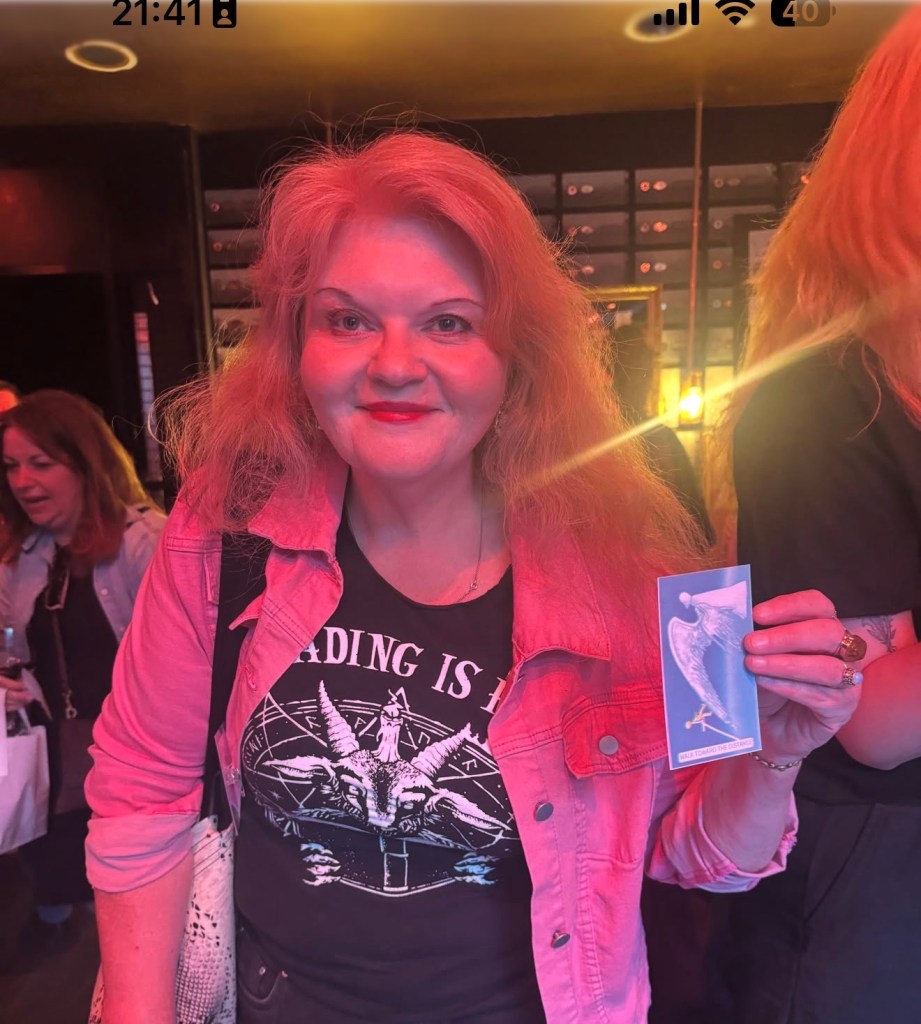
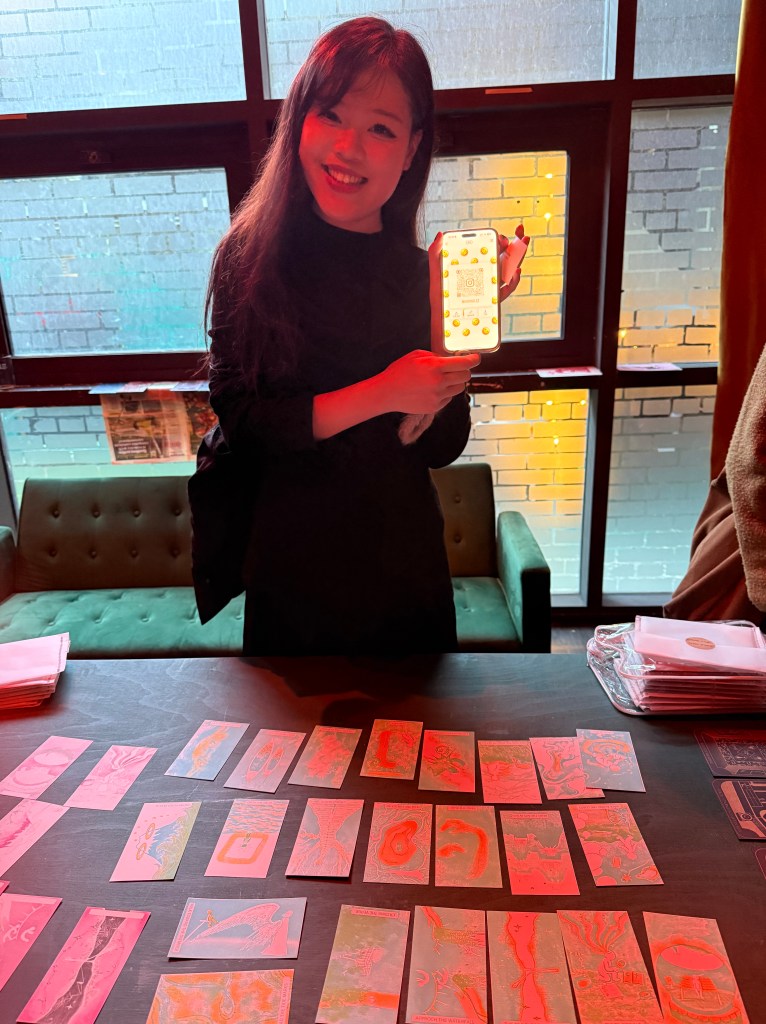
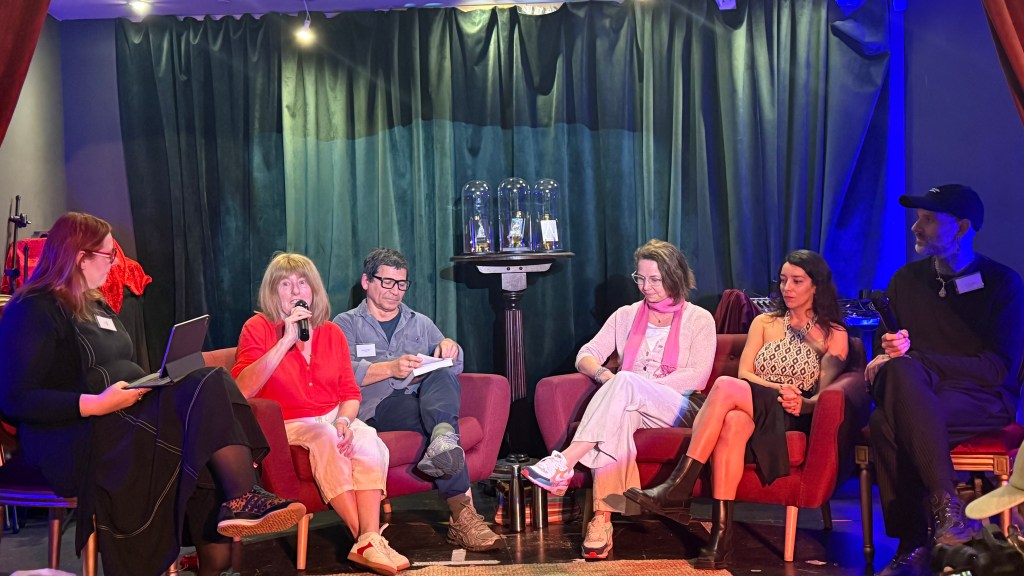
Additional highlights included workshops on print culture, body-based tarot decks and systemic healing, as well as panels that reflected on tarot’s social, cultural and historical legacies. A roundtable discussion considered the personal and collective impacts of tarot, opening space for reflection on how the practice resonated across different communities and experiences. The day concluded with evening events such as “Meet the Deck,” where different tarot creators demonstrated their work and shared the distinctive approaches behind their decks. My favourite was the Threshold deck by @margravelucian. It is so beautiful (as is Lucian, to be fair)and soaked in profundity. Queer and alchemical.
Inspiring
The most inspiring sessions I attended were:
Sarah Bellisario: Archetype and Goddess Creation Workshop, where I made Tarot cards for my ancestors and another version of the Goddess I keep seeing, whom I have name The Goddess Without Fear.
Sara Myers: Tarotology as a Dramaturgical System. This is something I wish to explore more in my theatre work.
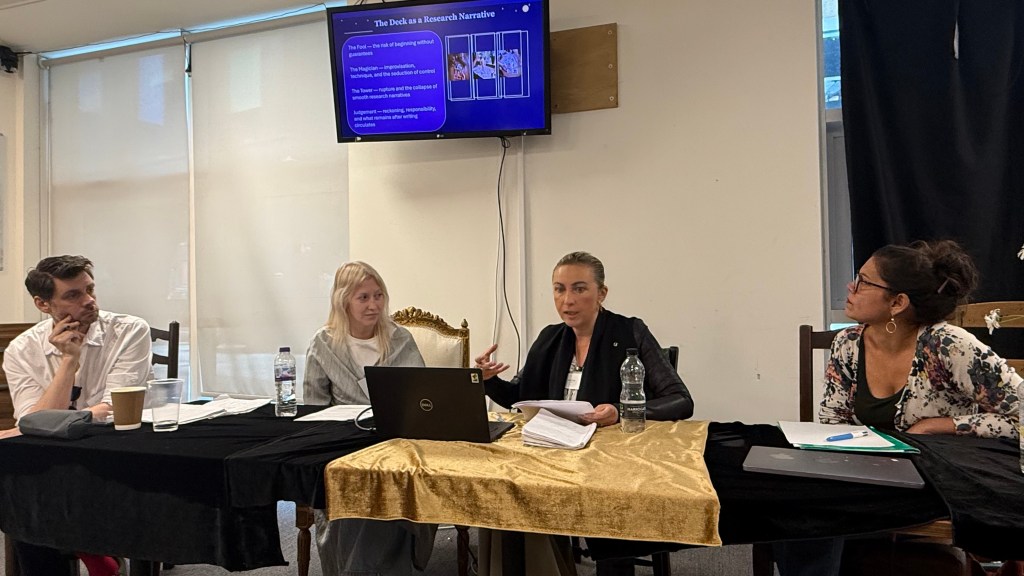
Ziv Epstein: Interpretive Cultures: Resonance, Randomness and Negotiated Meaning for AI Assisted Divination and Karin Valis: Synthetic Symbols- both of these were very intriguing talks about the connections between AI and divination, offering us different ways of thinkng about AI and – crucially – avoiding doomsaying and offering up some inspiring and thought-provoking ideas. Karin’s talk posited the questions ‘Can we use the latest machine-learning insights into the embedding spaces to slice the reality into a different set of fundamentals, and how would these be magically different from the tarot-specific constellation? And how do different archetypal ontologies of divination systems affect their outcomes?’
Alessandra Santos: Tarot as Filmic Method: Constellation, Chance, and Initiation in The Holy Mountain and The Neon Demon. This one was my absolute jam. I love both of these films and as Santos explained the way they were devised using Tarot I decided to create my new film using divination methods (more on that another time)
Nina Smolnikova: Revival of Girlhood Experience: Continuity, Creativity, and Oscillation in Tarot Practice in Russia. This one was brilliant because it offered an insight into divination in contemporary Russian culture. It is good to be able to hear from Russian people during these dark times to keep the lines of communication open. I miss Russia so much and Russian friends. Nina was brilliant.
Marisa Carnesky: Cyclical Bodies in the Work of Pamela Colman Smith. Marisa is a well-known performer in London and some of her work has used tarot. It was great to hear what she has been doing and it is as usual really beautiful and fun.
 Art and Magick