

artist and alchemist
Born in France and later becoming a prominent figure in Britain, Philippe-Jacques de Loutherbourg (1740-1812) was a multi-talented artist, renowned for his captivating mastery of painting, drawing, and stage design. His visionary landscapes, mesmerizing seascapes, and evocative historical compositions positioned him among the most esteemed artists of his time.
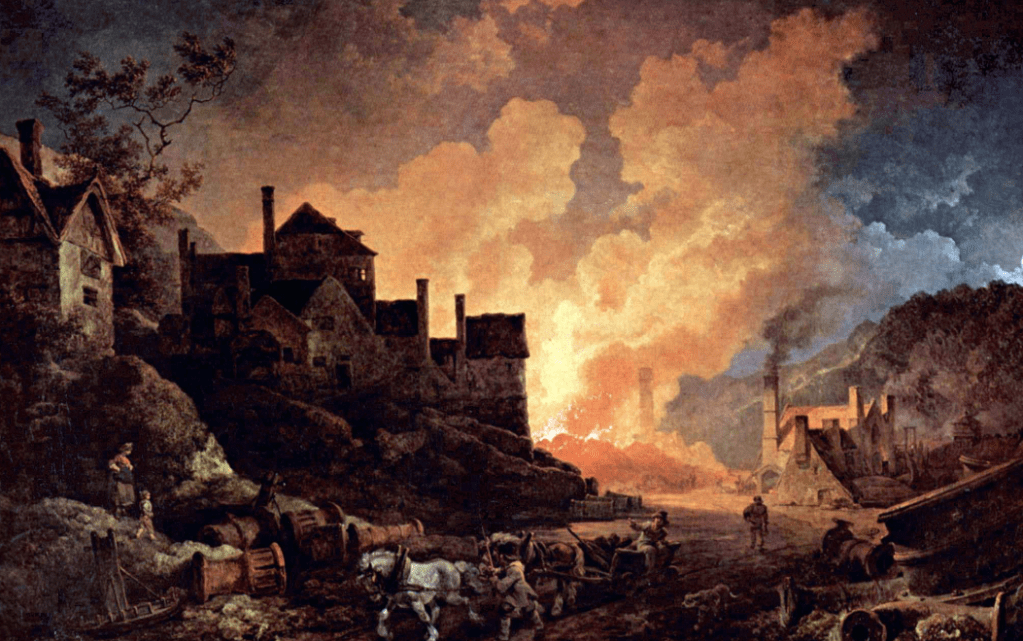
Wikipedia. “File:Philipp Jakob Loutherbourg D. J. 002.Jpg.” Wikimedia Foundation. https://commons.wikimedia.org/wiki/File:Philipp_Jakob_Loutherbourg_d._J._002.jpg.
Loutherbourg, born in Strasbourg, France, started his artistic journey in Paris before making his way to London in 1763. Without wasting any time, he swiftly established himself as a prominent figure in British society, ultimately earning a coveted spot as a member of the prestigious Royal Academy. In addition, Loutherbourg manifested his talents as a stage designer, collaborating with the acclaimed David Garrick at the Drury Lane theatre. He even etched his name in history by pioneering realistic scenery and visual special effects on the London stage, a feat that had not been accomplished before. Not one to stop at mere accolades, he pushed the boundaries of creativity further by creating the Proto-cinema apparatus known as the Eidophusikon, which marked a significant milestone.
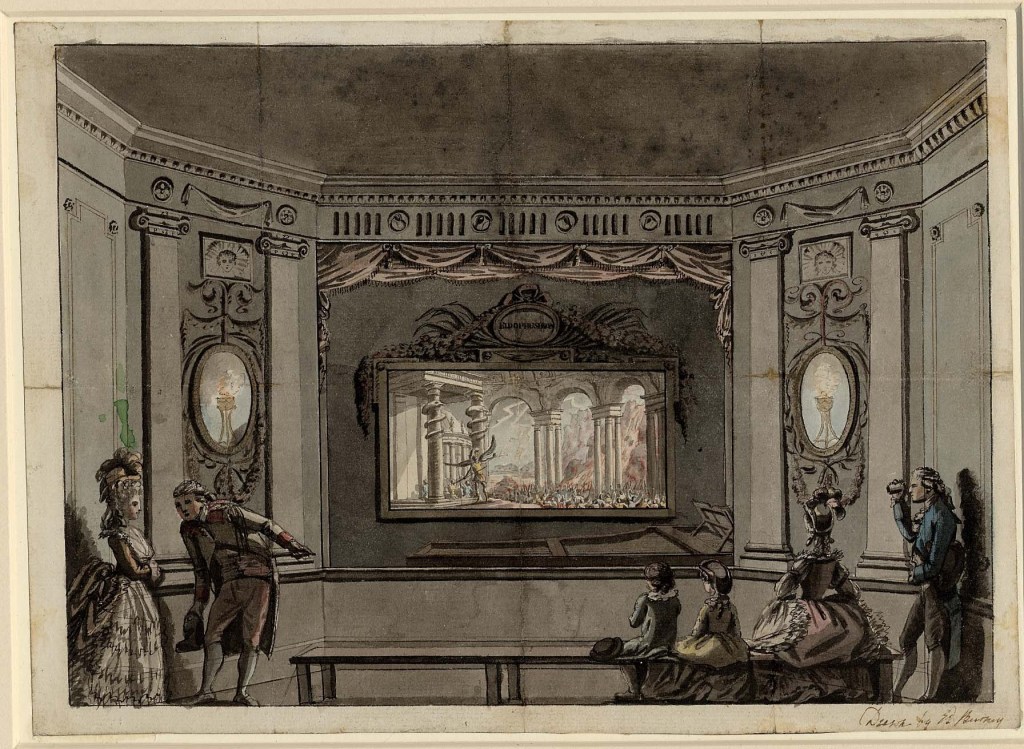
Loutherbourg’s paintings are characterized by their dramatic use of light and shadow and their sense of movement and energy. He was probably the first painter to achieve a realistic sublime with paintings that were utterly realistic in their imagery but offered an overwhelming feeling of sublime transcendence. The paintings he created late in life were quite mystical and involved imagery and concepts drawn from Swedenborg and his own occult practices.
Louthrbourg’s life was colourful and trod the knife-edge of scandal more than once. His principal;a biographer is Dr Rüdiger Joppien who wrote a PhD thesis on de Loutherbourg but this has not been published in English. Historian Iain McCalman has written several articles about de Loutherbourg, presumably while writing his biography of Cagliostro (see below), and there have been a scant handful of art history and theatre articles published about the artist but altogether very little. This is frankly bizarre, when his significance in art history and theatre history is taken into account.
Loutherbourg was a genuinely talented artist and serious scholar of the esoteric, but he had a dark side. Despite being a successful painter in Paris, elected to the Academie and praised by the philosopher Denis Diderot, he apparently got involved with characters practicing blackmail and larceny. Reinventing himself in London as a stage designer went well, but taking a commission from the libertine William Beckford (Britain’s richest man, a slaveholding plantation owner and paedophile) was perhaps a cursed endeavor. His subsequent business partnership with the notorious magician Cagliostro in Switzerland ended badly. Returning to London, he and his wife opened a faith healing clinic that was finally shut down by the authorities. Still, he managed to reinvent himself yet again as a history painter of stirring battle scenes and lurid Biblical tableaux from the Book of Revelations.
P.J. De Loutherbourg, The romantic and picturesque scenery of England and Wales, London 1805 view
Rüdiger Joppien, Philippe Jacques de Loutherbourg, RA, 1740-1812: [catalogue of an exhibition arranged by the Greater London Council and held at Kenwood, the Iveagh Bequest, Hampstead Lane, N.W.3] 1973.
Occultism
Loutherbourg was a serious and dedicated occultist and alchemist. He invented special effects and pigments in his alchemical lab as well as more spiritual alchemical workings. He had a magic circle and engaged in ritual magic. His wife Lucy joined him in his magical endeavours but at the same time also tried to monitor and control his public image as a magician.
Eighteenth-century occultism encompasses various beliefs and practices considered “occult” or hidden during that time. The last third of the 18th century in particular was a busy period for occultists as many grimoires were published or republished at this time.
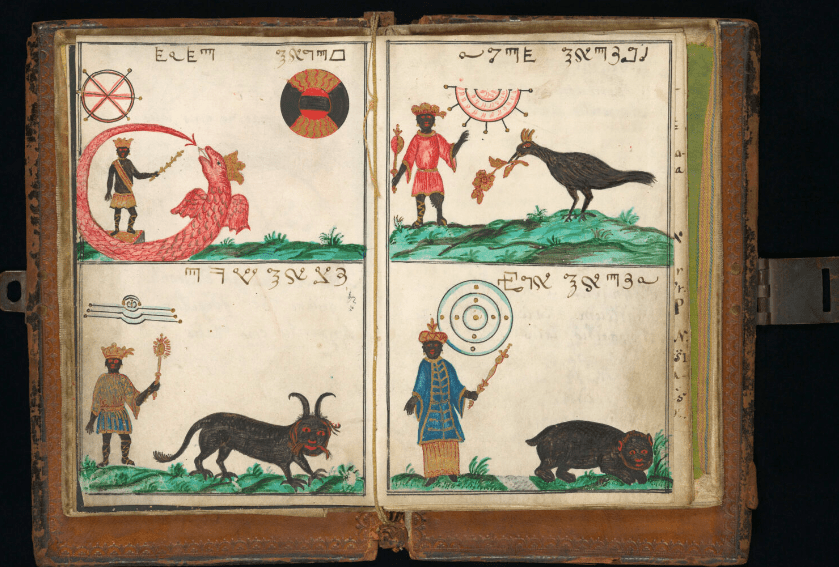
Alchemy was a philosophical and spiritual practice aimed at transforming base metals into gold and discovering the elixir of life. Alchemists believed that matter was composed of the four elements (earth, air, fire, and water) and that these elements could be transformed into one another. Alchemy was often associated with Hermeticism, a philosophical and religious tradition based on the teachings of the ancient Greek philosopher Hermes Trismegistus. Hermeticism emphasized the unity of all things, the interconnectedness of the macrocosm and the microcosm, and the idea that the divine is present in all things. It also emphasized the importance of studying nature, mathematics, and astronomy.
LUCY DE LOUTHERBOURG
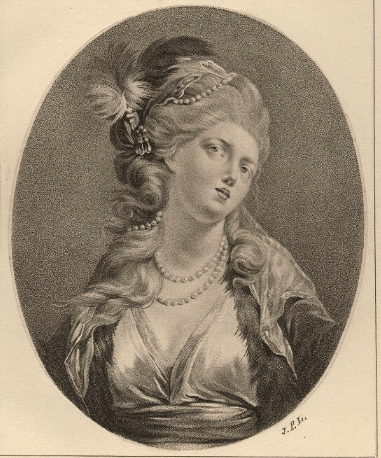
Lucy was a young widow who married Loutherbourg a few years after he moved to London. The couple appears not to have had any children but formed a strong collaborative relationship. Lucy was deeply involved in all Loutherbourg’s endeavours. She seems to have been a well-known figure in London. Loutherbourg believed firmly in including women as equal partners in his magical practices and for pushing Freemasonry to accept women on equal standing with men.
CAGLIOSTRO
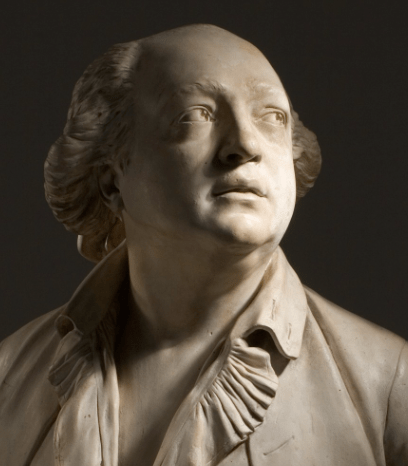
Count Cagliostro was a friend and associate of Loutherbourg until they fell out dramatically. Alessandro di Cagliostro was an 18th-century occultist and self-proclaimed magician. His ideas and teachings blended various esoteric and mystical traditions of his time and were influenced by Swedenborg, although it is unclear if they ever met in London. Cagliostro’s ideas were diverse and evolved, combining various traditions and showing the depth of his curiosity and scholarship.
Cagliostro was influenced by alchemical and Hermetic traditions, which emphasized the transformation of the self and pursuing spiritual enlightenment. He believed in a universal life force or energy that could be harnessed for personal growth and healing.
He was involved in Freemasonry and claimed to have attained high degrees within various sects of the organization. He incorporated Masonic symbolism and rituals into his teachings and offered initiations and memberships into his own secret society, the Egyptian Masonic Rite. He fell out with British Freemasons because he declared that their methods were wrong and they should change to his Egyptian Rite. They declined. Clearly, he was no diplomat.
Cagliostro was known for his self-styled ‘Egyptian Cure’ – a medicinal ritual supposed to offer a full human rejuvenation. He claimed to have been in Egypt where he discovered secret knowledge and initiations from ancient Egyptian sources. He incorporated Egyptian symbolism and rituals into his teachings, presenting himself as a custodian of ancient wisdom and claiming access to hidden knowledge. He also developed an Egyptian Rite for his version of Freemasonry.
Cagliostro promoted various healing practices, including herbal remedies, magnetism, and energy healing. He claimed to be able to heal through manipulating life force energy and advocated for a holistic approach to health and well-being. He taught faith healing to Loutherbourg and Lucy, who opened their own faith healing clinic in London. The clinic was free to the poor, which attracted large crowds until the authorities shut them down.
Cagliostro emphasized the pursuit of spiritual enlightenment and personal transformation. He taught that individuals could attain higher levels of consciousness and spiritual awareness through the practice of his teachings, rituals, and initiations.
It is important to note that Cagliostro’s ideas and practices were controversial and often met with skepticism and criticism during his lifetime. His claims of possessing supernatural powers and secret knowledge led to accusations of fraud and charlatanism. While many were drawn to his teachings and practices, others dismissed him as a fraud or a showman. He was eventually arrested in Italy by the Inquisition and incarcerated until his death; his papers were presumably destroyed.
My own take on Cagliostro is this: I think he was a remarkable man. Coming from humble origins (which he tried to cover up), his brilliance was evident in his success in holding his own with the upper crust of European society and being genuinely erudite about magick. It is highly possible that he did go to Egypt and North Africa in general to study magick – he was a Sicilian after all. But he never understood authority and, unlike his friends and fellow adventurers, the Comte de St Germain and Giacomo Casanova, he fell foul of the Inquisition and died in prison.
For more on Cagliostro I recommend consulting the following books:
- Cagliostro and his Egyptian Rite of Freemasonry by Henry Ridgeley Evans
- The Last Alchemist by Iain McCalman
- The Masonic Magician by Phillipa Faulks and Robert Cooper
 Art and Magick
