
About
WHAT IS IT?
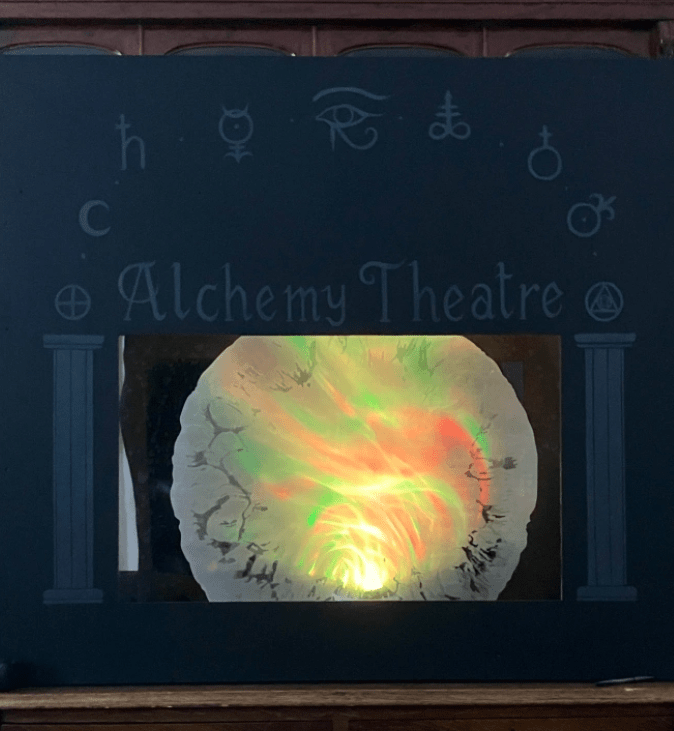
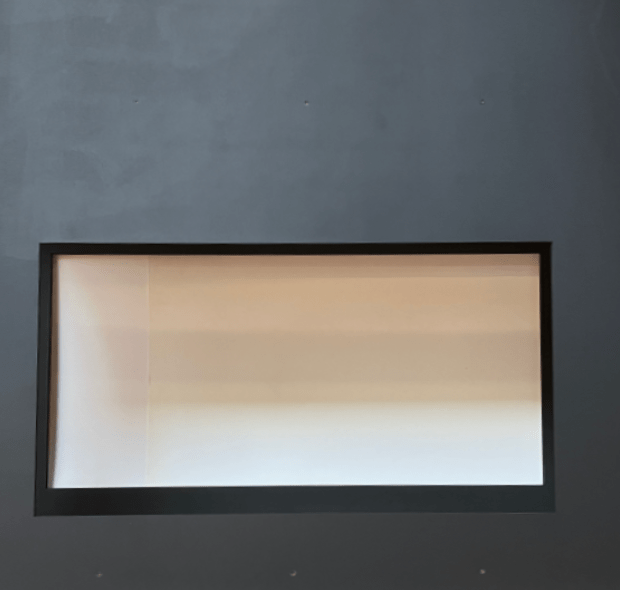
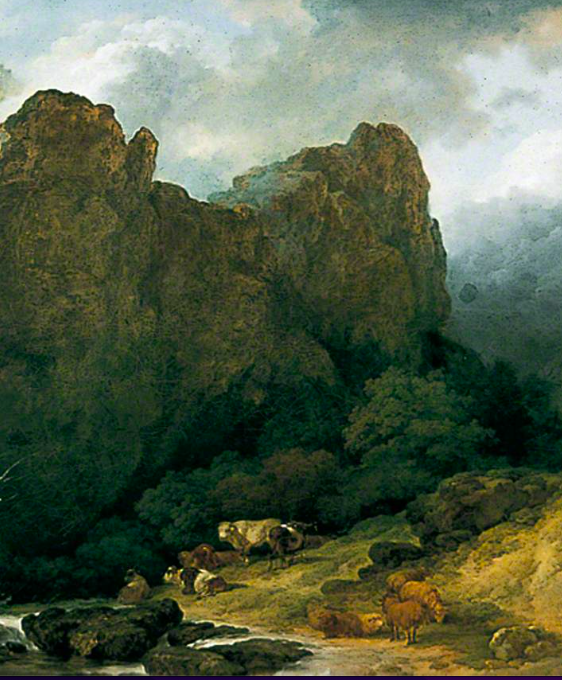
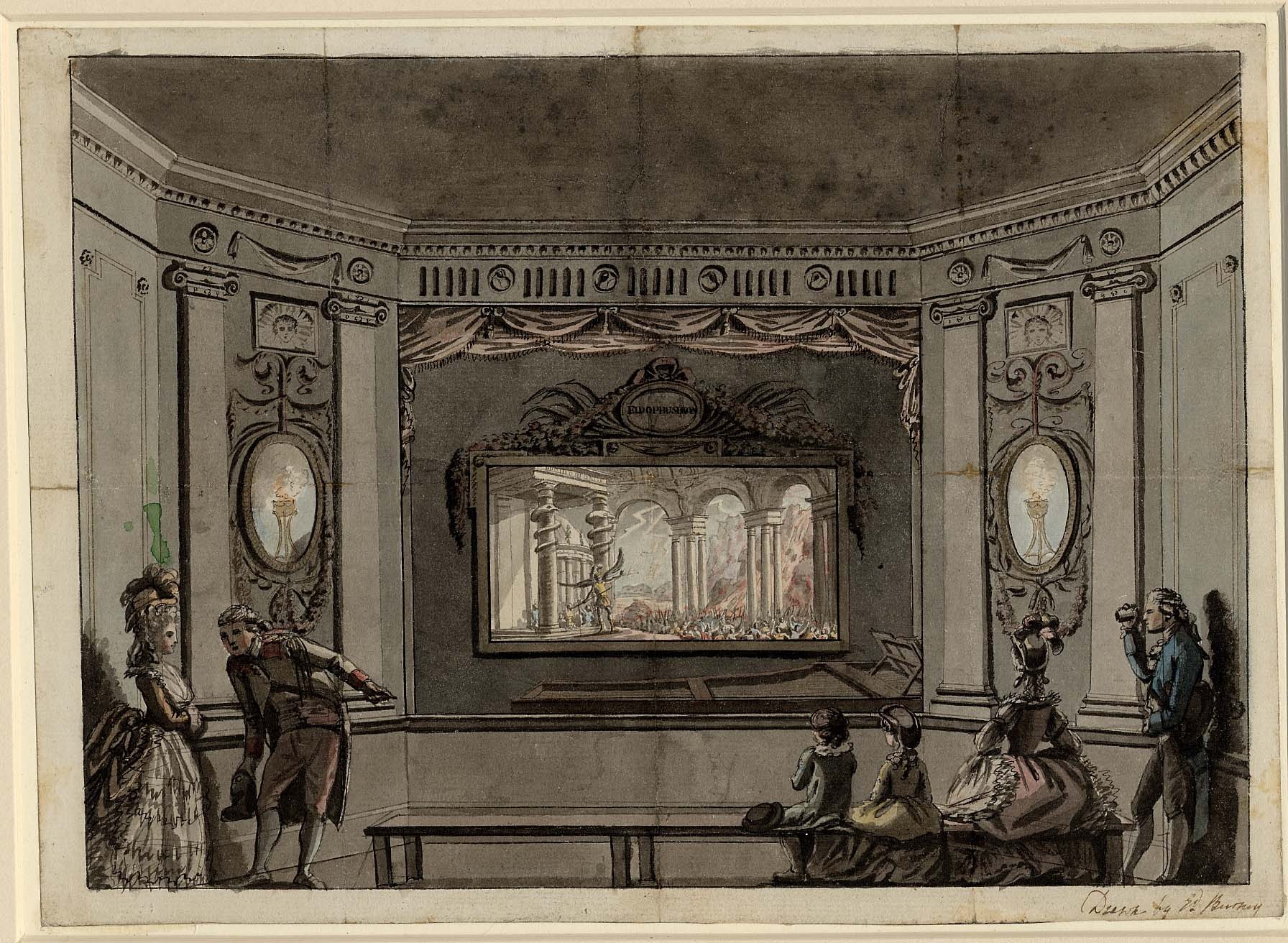
The Eidophusikon Reimagined is Gillian McIver’s reconstruction and reimagining of the iconic Eidophusikon (a word meaning ‘Image of Nature”), a milestone in theatre history. It was created by the 18th-century French painter Philip James de Loutherbourg RA, who served as a stage designer for David Garrick at Drury Lane, creating sublime stage effects that astounded audiences. The original Eidophusikon, widely regarded as a crucial forerunner to cinema, was a small-scale stage set that combined dramatic paintings, lights, gauze, coloured glass, and smoke to create scenic effects.
Gillian McIver’s Eidophusikon follows de Loutherbourg’s original plan of a performance made up of five distinct scenes each showcasing different effects and sensations. Each scene is a work of contemporary art that explore ideas about magick, art and science, the material world and the afterlife, and his vision of the Divine. The emphasis is on the tension between the real and the sublime, creating illusions and phantasmagoris thorugh analogue means.
Gillian McIver invites contemporary artists to collaborate on the Eidophusikon, making scenography elements to go inside the apparatus. She is currently working with Liane Lang, Shannon Rakochy, Nazir Tanbouli, Natasha Redina, and Marwan ElGamal. HSe is working with composer and musician Takatsuna Mukai and director Jagoda Winter who directs the perfomance.
Built by Mark Fairhurst and with the assistance of lighting guru Mark diz-qo Watson.
Eidophusikon Exhibited
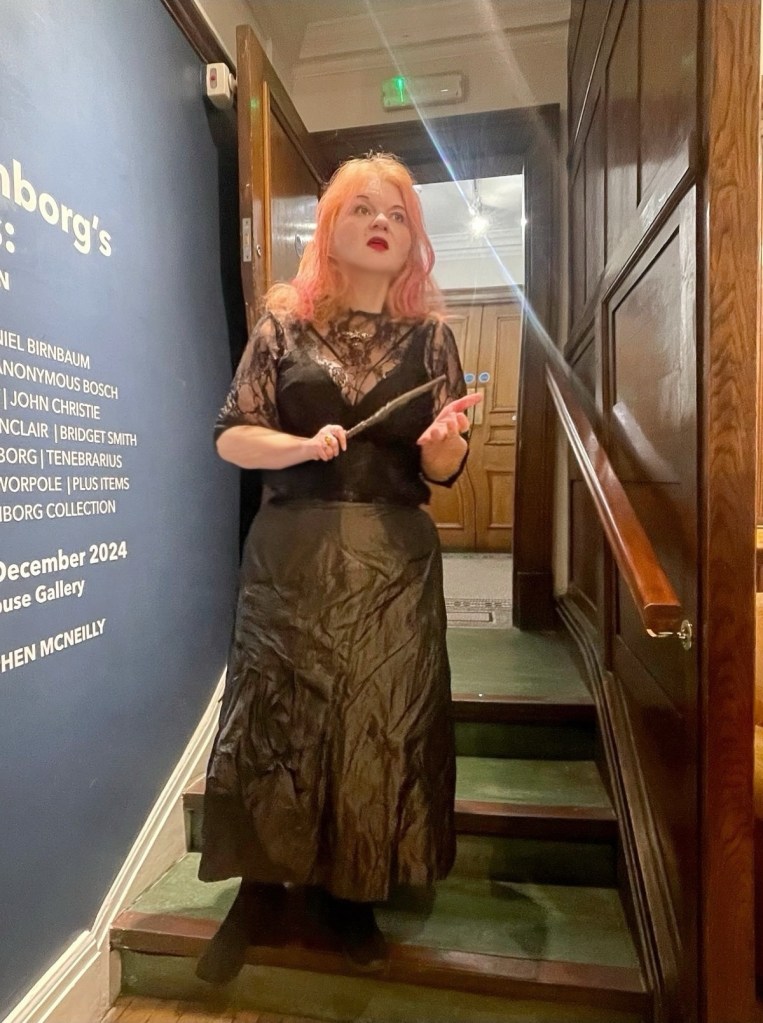
The piece made its debut at the 2024 Bloomsbury Festival, held in the Wynter Room of Swedenborg House—an exquisite period library—complemented by a compelling contextualized exhibition.
 Art and Magick