
Apologia at the Camden Fringe
I’ve been Artist and Researcher in Residence at Swedenborg House in London since November 2023. My research has focused on the history, artistic direction, philosophical concepts, and prospective evolution of Loutherbourg’s Eidophusikon model theatre. Because Loutherbourg did not leave any papers or records behind when he ided n 1812, I am forced to rely on historical accounts by others, that characterised the model theatre as both an object and a viewing experience. Fortunately, there are several descriptions extant, and some playbills.
In Britain, there is an artist named Robert Poulter who is widely regarded as the world’s foremost authority on the Eidophusikon in particular, and model theatres generally. He has a company called New Model Theatre, which builds model theatres and Eidophusikon reproductions. He travels about performing shows of his own creation that are just incredible. You can see more of the New Model Theatre here.

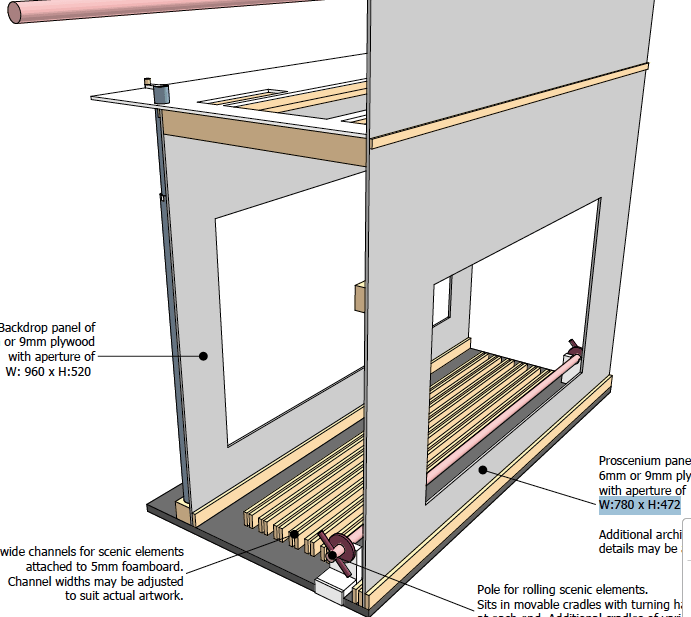
Fortunately, I was able to contact Robert Poulter and, in addition to organising an event including one of his incredible performances, I am able to benefit from his knowledge and assistance on establishing my own Eidophusikon. Robert wrote a book called How to Make Your Own Model Theatre, which we utilised as a framework. Collaborating with Mark Fairhurst of Bosco Design, we developed – and Mark built – a functional Eidophusikon in the following dimensions:
However, building an Eidophusikon is one thing; activating the Eidophusikon, understanding the broader sociopolitical, aesthetic, and philosophical contexts in which it was first created – and which I would like to appreciate in order to create my own iteration of it – is something entirely different. My initial step was to look deeper into Loutherbourg’s life and discover what motivated him in his creative pursuits. There are numerous things I might say about him, but one that stood out to me early on was his close association with the legendary Count Cagliostro. I had been familiar with the personage of Cagliostro for some time. I knew he was a famous 18th-century magician, Freemason and celebrity. It appears that there were quite a few persons of such type traversing across Europe at the time, including the Comte de St Germain, so this was really interesting. In retrospect, we can call it the ‘pre-revolutionary’ age, an age of belief in magic, immortality and the fantastic – and simultanously, in scinece and Enlightenment ideas of liberty and equality.
I was particularly struck by Cagliostro’s own story: an impoverished boy from a bad part of Palermo, a bit of a guttersnipe in some ways, who completely reinvented himself – not only as a magician, but also as a spiritual guide and advisor to rulers and aristocrats ranging from Catherine the Great’s court to a slew of German princes. He was also prominent in London, where he met Loutherbourg. I wanted to grasp Cagliostro’s story and what made him so appealing to someone like Loutherburg.
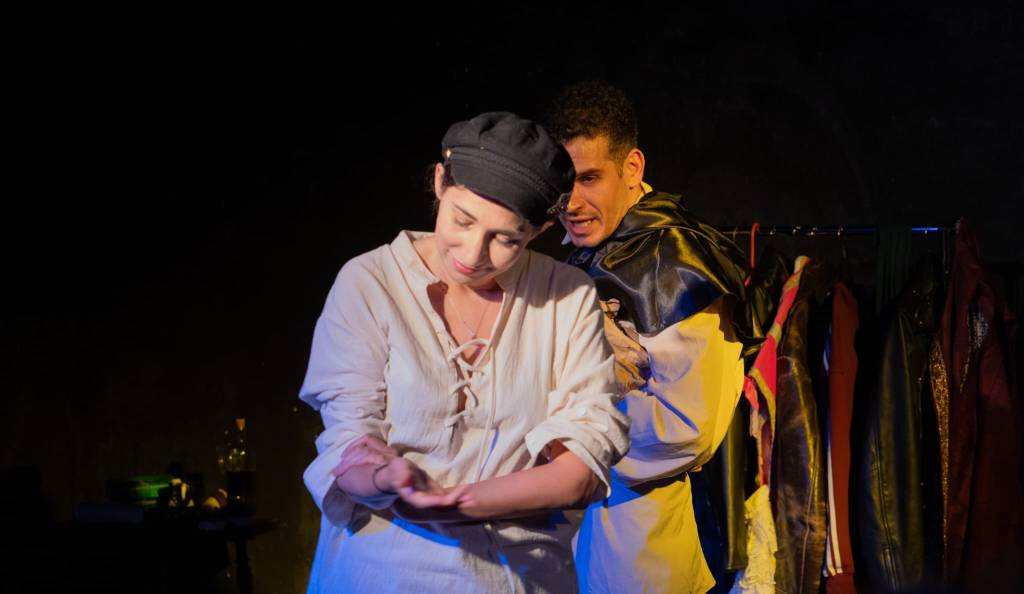
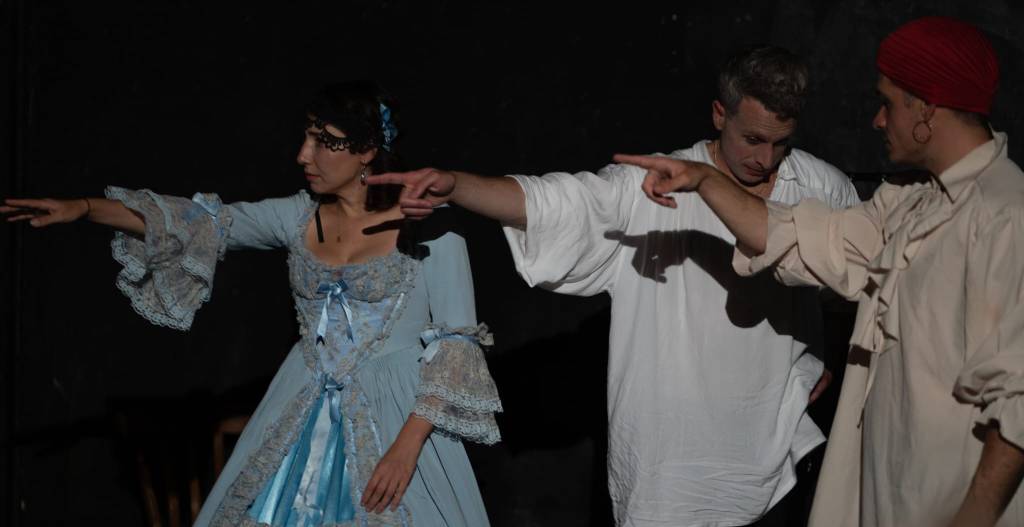
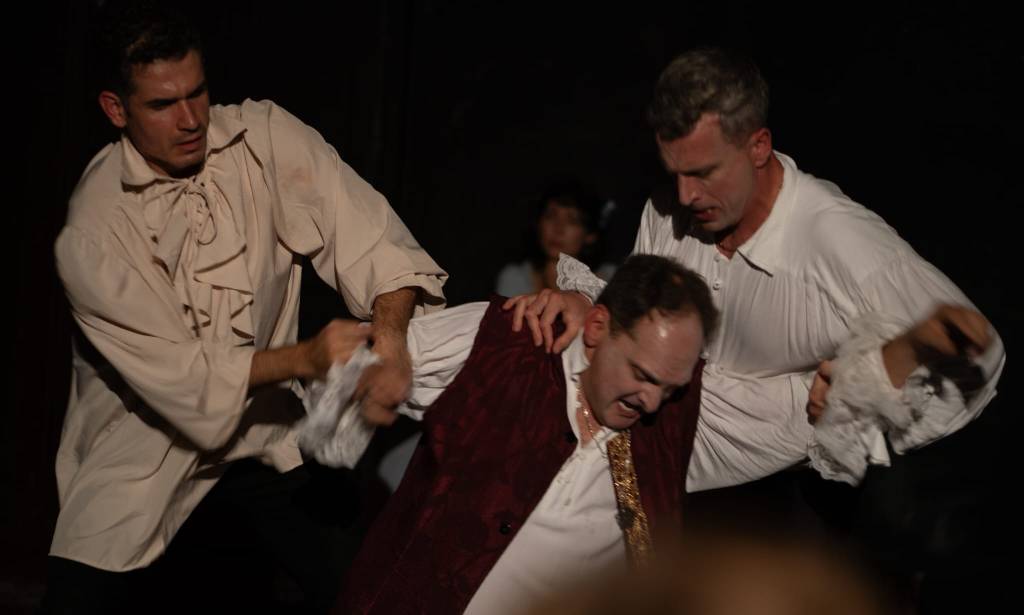
Uncovering the narrative has been a tremendous delight, and I have a lot more to say about it, but I’ve opted to do so through drama rather than writing. Yes, I wrote a play – Apologia – which has now been presented for the Camden Fringe. It was a success (sold out), and everyone who saw it basically told us they needed to see a much longer version because, first and foremost, the performances were superb, and secondly, the subject is too fascinating to fit into one hour. So, next year, Alchemy Theatre will produce a full-length version of Apologia. I’ll leave you with some great images of the production, and don’t worry, you’ll be able to see it in London and possibly elsewhere.
 Art and Magick