
video: READING BAUDELAIRE IN MONTPARNASSE
A poem by Chares Baudelaire
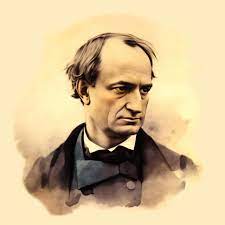
Correspondances
La Nature est un temple où de vivants piliers
Laissent parfois sortir de confuses paroles;
L’homme y passe à travers des forêts de symboles
Qui l’observent avec des regards familiers.
Comme de longs échos qui de loin se confondent
Dans une ténébreuse et profonde unité,
Vaste comme la nuit et comme la clarté,
Les parfums, les couleurs et les sons se répondent.
II est des parfums frais comme des chairs d’enfants,
Doux comme les hautbois, verts comme les prairies,
— Et d’autres, corrompus, riches et triomphants,
Ayant l’expansion des choses infinies,
Comme l’ambre, le musc, le benjoin et l’encens,
Qui chantent les transports de l’esprit et des sens.
— Charles Baudelaire
English Translations:
Here is my favourite translation of the poem:
Nature is a Temple where we live ironically
In the midst of forests filled with dire confusions;
Man, hearing confused words, passes symbolically
Under the eyes of the birds watching his illusions.
Like distant echoes in some tenebrous unity,
Perfumes and colours are mixed in strange profusions,
Vast as the night they mix inextricably
With seas unfounded and with the dawn’s delusions.
And there are the perfect perfumes of the Flesh,
That are as green as the sins in the Serpent’s mesh,
And others as corrupt as our own senses,
Having the strange expansion of things infinite,
Such as amber, musk, benzoin and sweet incenses,
That seize the spirit and the senses exquisite.
TRANSALTED BY THE POET ARTHUR SYMONS 1857
What are Correspondences?
‘a hidden harmony between the natural world and the human soul,’ also expressible as the old alchemical concept: ‘as above, so below’
Baudelaire’s concept of Correspondences is based on the idea that there is a hidden harmony between the natural world and the human soul, and that the senses can reveal this connection through symbols and analogies. Baudelaire was influenced by the philosophy of Emanuel Swedenborg, who believed that everything in the material world had a spiritual counterpart, and that the correspondence between them could be understood through intuition and revelation. Baudelaire also drew inspiration from the Romantic poets, who saw nature as a source of beauty and emotion, and the occult sciences, which explored the mystical aspects of reality.
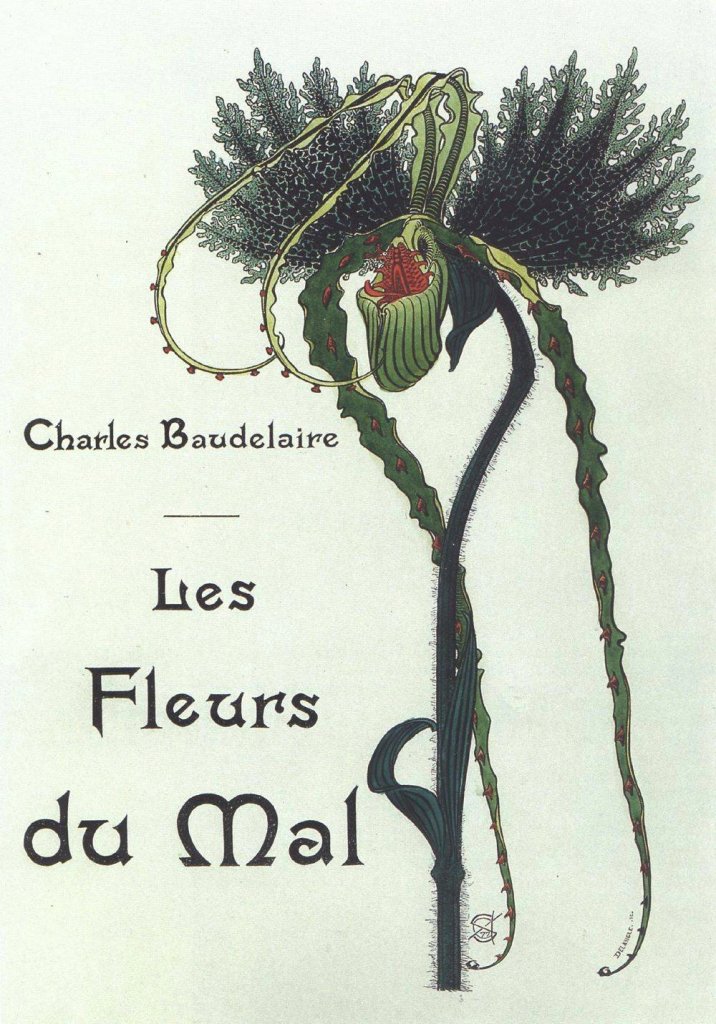
Baudelaire expressed his concept of Correspondences in his eponymous poem, which is part of his great collection Les Fleurs du Mal (The Flowers of Evil). The poem is written in a sonnet form, with four stanzas of different lengths and rhyme schemes. The first stanza introduces the idea that nature is like a temple, where the trees are columns and the wind is a voice. The second stanza describes the synesthetic experience of perceiving nature through different senses, such as hearing an oboe in a perfume, or feeling a child’s caress in a sound. The third stanza suggests that these sensations are symbols that reveal the secrets of nature, and that only the poet can decipher them. The fourth stanza concludes that the poet is like a translator, who can communicate the language of nature to the human audience.
Emanuel Swedenborg’s intriguing concept of correspondences deeply inspired Baudelaire, though Baudelaire put his own twist upon it. Delving into the depths of his philosophical and theological musings, we are confronted with a fascinating proposition: there exists a mysterious and symbolic bond between the physical and spiritual realms. Emmanuel Swedenborg’s theory of correspondences opens up a tantalizing gateway to a world where the tangible and intangible intertwine, where every aspect of the material realm finds its parallel in the ethereal domain. Prepare to challenge your preconceptions and embark on a journey through the enigmatic corridors of Swedenborg’s visionary ideas.
According to Swedenborg, the exquisite connection between the spiritual and physical realms can be marvelously observed in countless facets of life. Take, for instance, his intriguing proposal that certain objects, events, and phenomena in the tangible world carry profound symbolic meanings, representing sublime spiritual concepts. In his fervent belief, the natural world is teeming with resplendent symbols and profound correspondences, waiting to be deciphered and embraced to unveil profound insights into the ethereal realm. With each interpretation, a gateway to a realm of enlightenment awaits, inviting us to explore the boundless depths of spiritual understanding.
Swedenborg’s theory of correspondences has had an impact on different areas including philosophy, theology, and art. It has been employed to interpret religious texts, comprehend symbolism in art and literature, and delve into the connection between the physical and spiritual realms of existence.
Swedenborg’s ideas delve into the workings of the human mind and consciousness. According to him, the human mind can be divided into three levels: the natural, the spiritual, and the celestial. These levels are linked to different aspects of our experiences and have their own unique traits and roles.
Baudelaire’s concept of Correspondences is important because it shows his innovative and original approach to poetry, which combines the aesthetic, the spiritual, and the symbolic. Baudelaire was one of the first poets to use synesthesia, the mixing of senses, as a poetic device, and to explore the connections between the physical and the metaphysical realms. His concept of Correspondences also influenced other poets and artists, such as Arthur Rimbaud, Paul Verlaine, and the Symbolist movement, who sought to create new forms of expression that could capture the essence of reality beyond its appearance.
 Art and Magick